
Learn Strategies
Strategies that can deliver wedges
Very different actions can deliver the same wedge. Some are about using energy and materials more efficiently. Others shift supply to cleaner options, electrify end uses, capture and store CO₂, remove CO₂ from the air, or change land and food systems. Some strategies can deliver multiple wedges, but real world limits in markets, resources, and land constrain totals.
Browse all 36 strategies that can deliver at least one wedge of mitigation, and see the scale they must be deployed at to do so.
Strategies are grouped into five key sectors:
Electricity
There are 8 strategies that deliver clean electricity using renewables, nuclear, and carbon capture technologies.
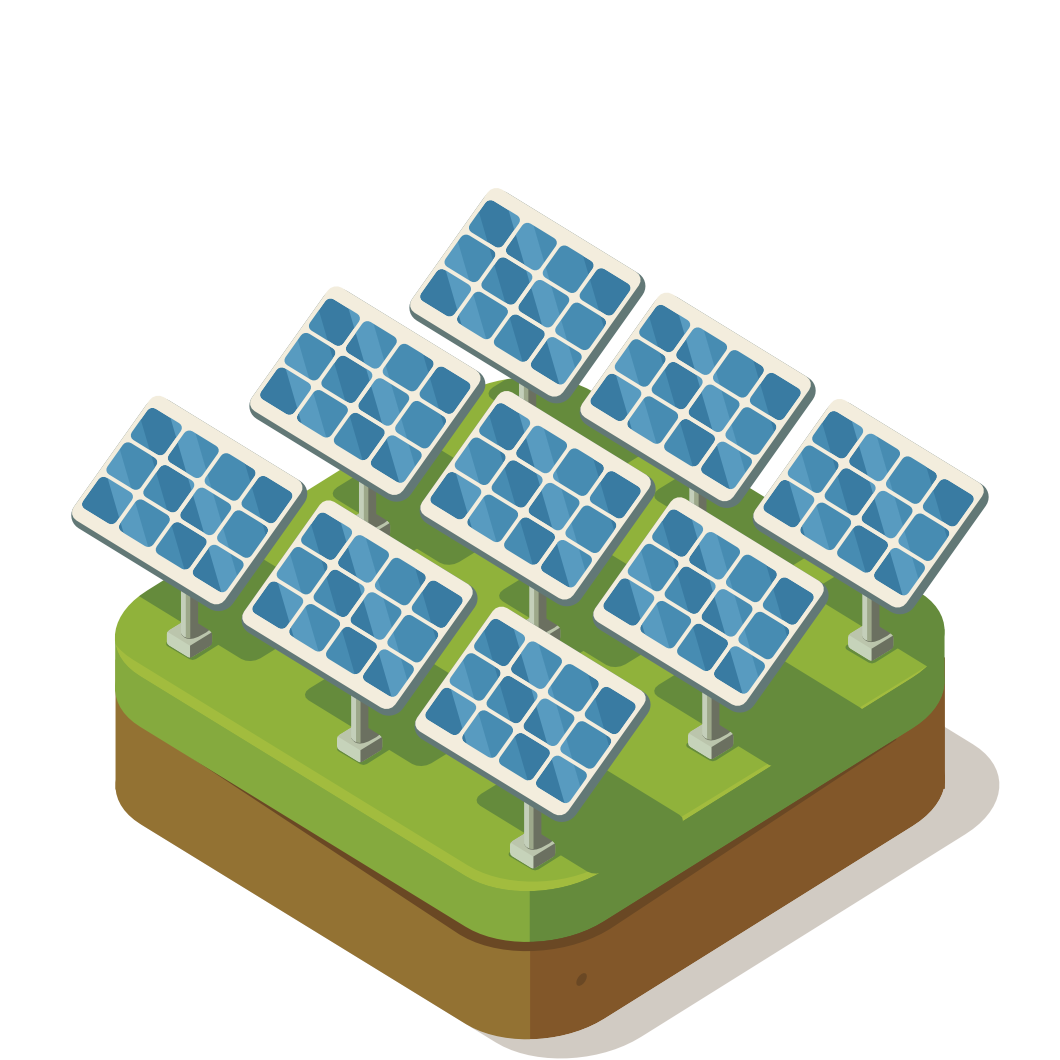 Build more solar farms
 to generate 2,840 TWh of electricity per year (6.6% of global supply in 2050)
Build more solar farms
Build more solar farms to generate 2,840 TWh of electricity per year (6.6% of global supply in 2050)
Solar farms and rooftop systems use photovoltaic panels to turn sunlight into electricity. Once built, they produce power without burning fuel, and so avoid CO₂ that would otherwise come from coal- and gas-fired power stations. The climate benefit depends on what mix of power stations they replace, and on being able to deliver electricity when and where it’s needed. Solar power only generates during daylight hours and so needs to be supported by stronger grids, flexible supply and demand, or energy storage.
Achieving one wedge requires generating about one-third more electricity than all solar power produced worldwide in 2024 (2,100 TWh) (1). It’s also about the same as Europe’s total electricity generation in 2024 (2,800 TWh) (1). This equates to just 300 kWh per capita in 2050, less than 3% of per capita consumption in the United States today (2). This implies around 2.2 TW of new solar capacity operating by 2050, meaning 70 GW must be built each year until then, less than one-ninth of the 600 GW built in 2024 (3).
Solar farms can deliver up to 4 wedges in total, equating to around a quarter of global electricity supply in 2050.
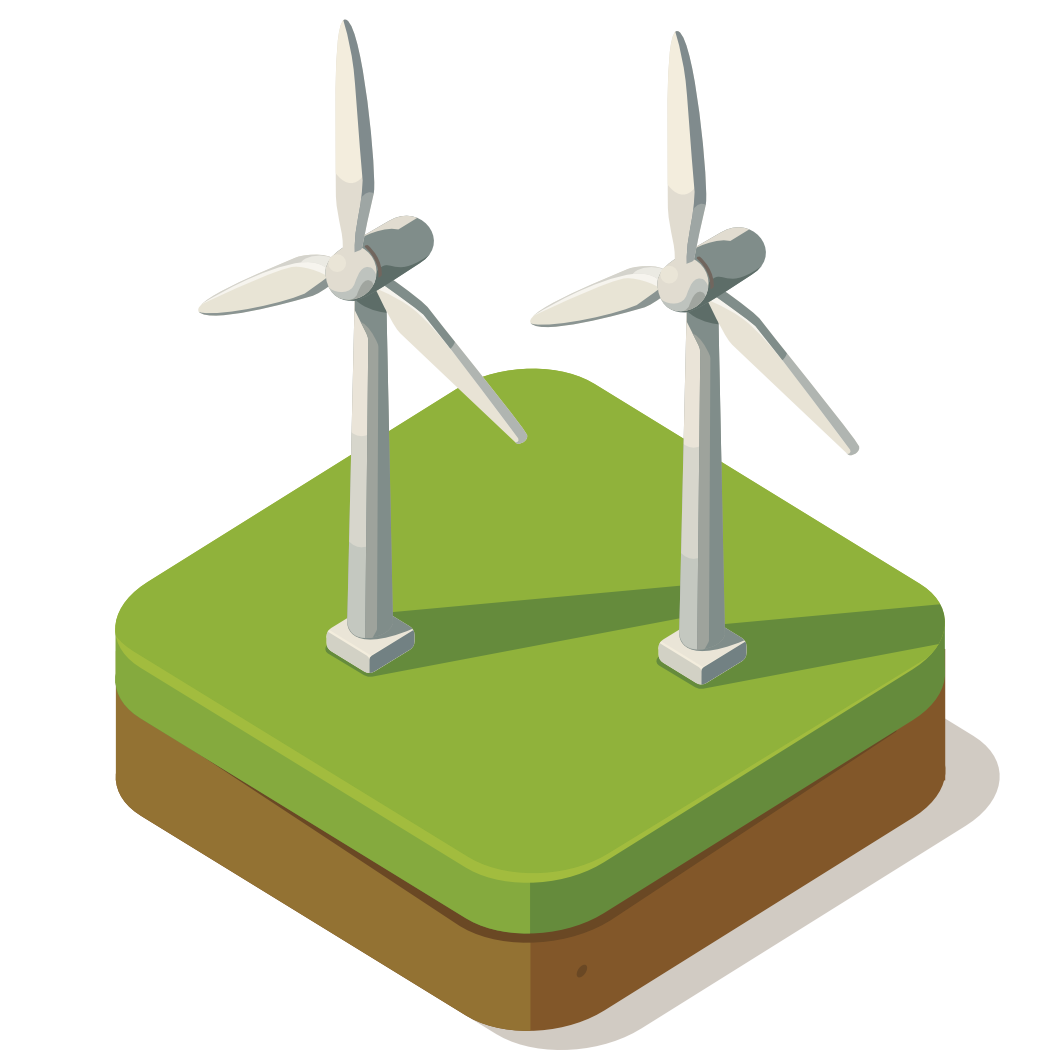 Build more wind farms
 to generate 2,840 TWh of electricity per year (6.6% of global supply in 2050)
Build more wind farms
Build more wind farms to generate 2,840 TWh of electricity per year (6.6% of global supply in 2050)
Wind farms turn atmospheric motion into electricity using large-bladed wind turbines. Once built, they produce power without burning fuel, and so avoid CO₂ that would otherwise come from coal- and gas-fired power stations. The climate benefit depends on what mix of power stations they replace, and on being able to deliver electricity when and where it’s needed. Wind power only generates when it is windy and so needs to be supported by stronger grids, flexible supply and demand, or energy storage.
Achieving one wedge requires generating about one-eighth more electricity than all wind power produced worldwide in 2024 (2,500 TWh) (1). It’s also about the same as Europe’s total electricity generation in 2024 (2,800 TWh) (1). This equates to just 300 kWh per capita in 2050, less than 3% of per capita consumption in the United States today (2). This implies around 800 GW of new offshore or 1,100 GW of new onshore wind capacity operating by 2050, meaning 30-40 GW must be built each year until then, just one-quarter to one-third of the 120 GW built in 2024 (3).
Wind farms can deliver up to 4 wedges in total, equating to around a quarter of global electricity supply in 2050.
 Build more nuclear reactors
 to generate 2,840 TWh of electricity per year (6.6% of global supply in 2050)
Build more nuclear reactors
Build more nuclear reactors to generate 2,840 TWh of electricity per year (6.6% of global supply in 2050)
Nuclear power stations generate electricity by splitting uranium atoms to produce steam, which spins a turbine to generate electricity. Because no fossil fuel is burned in the reactor, nuclear power has very low direct CO₂ emissions, and so avoid CO₂ that would otherwise come from coal- and gas-fired power stations. The climate benefit depends on what mix of power stations they replace. Like any major industrial facility, nuclear power requires strict oversight, robust safety systems, and long-term management of radioactive waste to minimise the risk of accidents and environmental harm.
Achieving one wedge requires generating as much electricity as that produced by all nuclear reactors worldwide in 2024 (2,800 TWh) (1). It’s also about the same as Europe’s total electricity generation in 2024 (2,800 TWh) (1). This equates to just 300 kWh per capita in 2050, less than 3% of per capita consumption in the United States today (2). This implies around 400 GW of new nuclear capacity operating by 2050, meaning 13 GW must be built each year until then, roughly double the 7 GW built in 2024 (3).
Nuclear reactors can deliver up to 4 wedges in total, equating to around a quarter of global electricity supply in 2050.
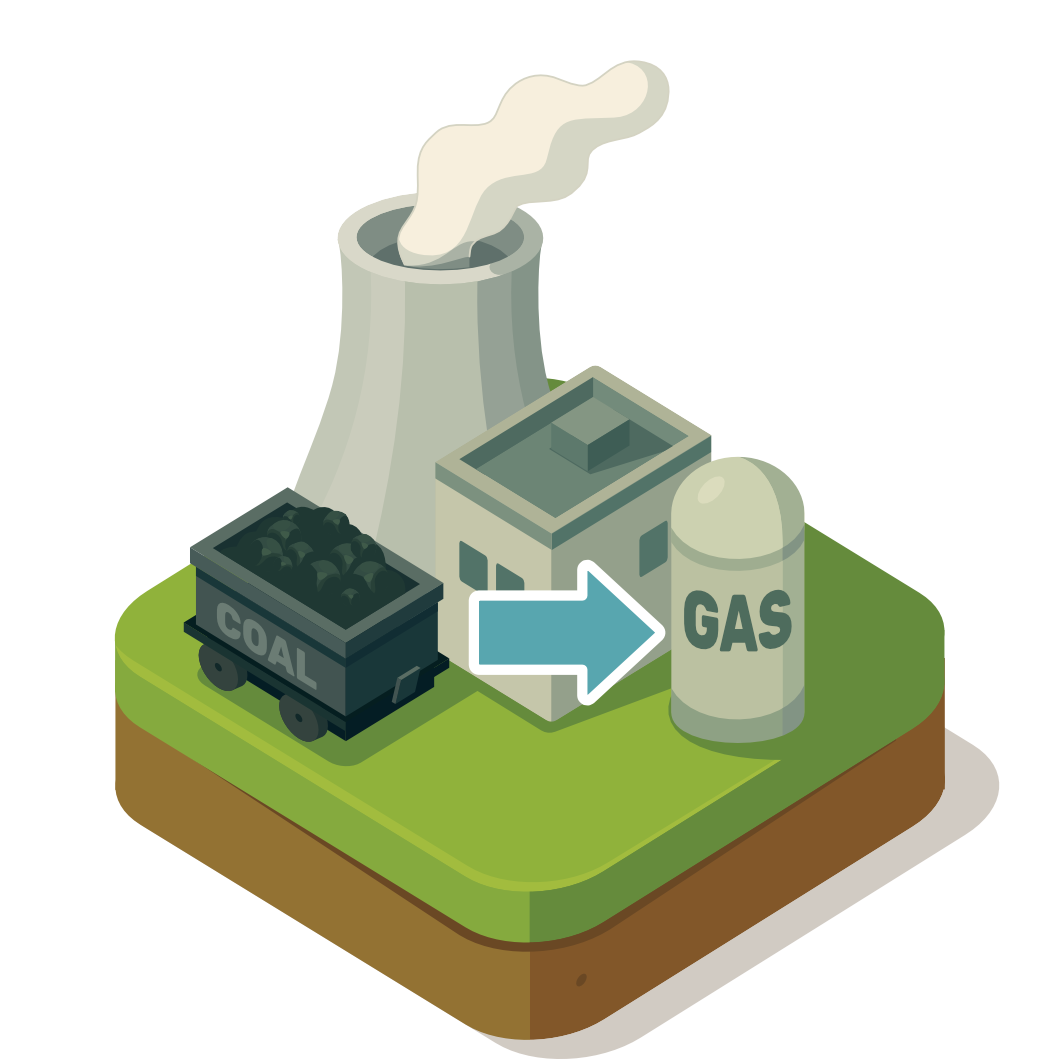 Switch from coal to gas plants
Switch from coal to gas to generate 4,120 TWh of electricity (9.5% of global supply in 2050)
Switch from coal to gas plants
Switch from coal to gas to generate 4,120 TWh of electricity (9.5% of global supply in 2050)
Replacing coal-fired power stations with gas-fired power station cuts emissions because burning gas emits roughly half the amount of CO₂ for each unit of electricity generated. However, gas is still a fossil fuel, so this strategy does not eliminate emissions. It can also increase emissions of methane (a powerful greenhouse gas) from extracting and transporting gas, so the overall climate benefit depends on controlling leaks across the supply chain (1).
Achieving one wedge requires replacing around 40% of the world’s coal-fired plants with gas-fired plants. This would increase global gas-fired electricity generation by 60%, relative to 2024 (2). In fuel terms, the additional gas required is around 600 bcm, roughly one-seventh of global gas consumption in 2024 (4,100 bcm) (2). This implies around 600 GW of coal capacity is replaced by 2050, meaning 20 large power stations must be switched each year until then.
Fuel switching can deliver up to 3 wedges in total, as there are expected to be more coal plants operating in 2050 than today without stronger climate action.
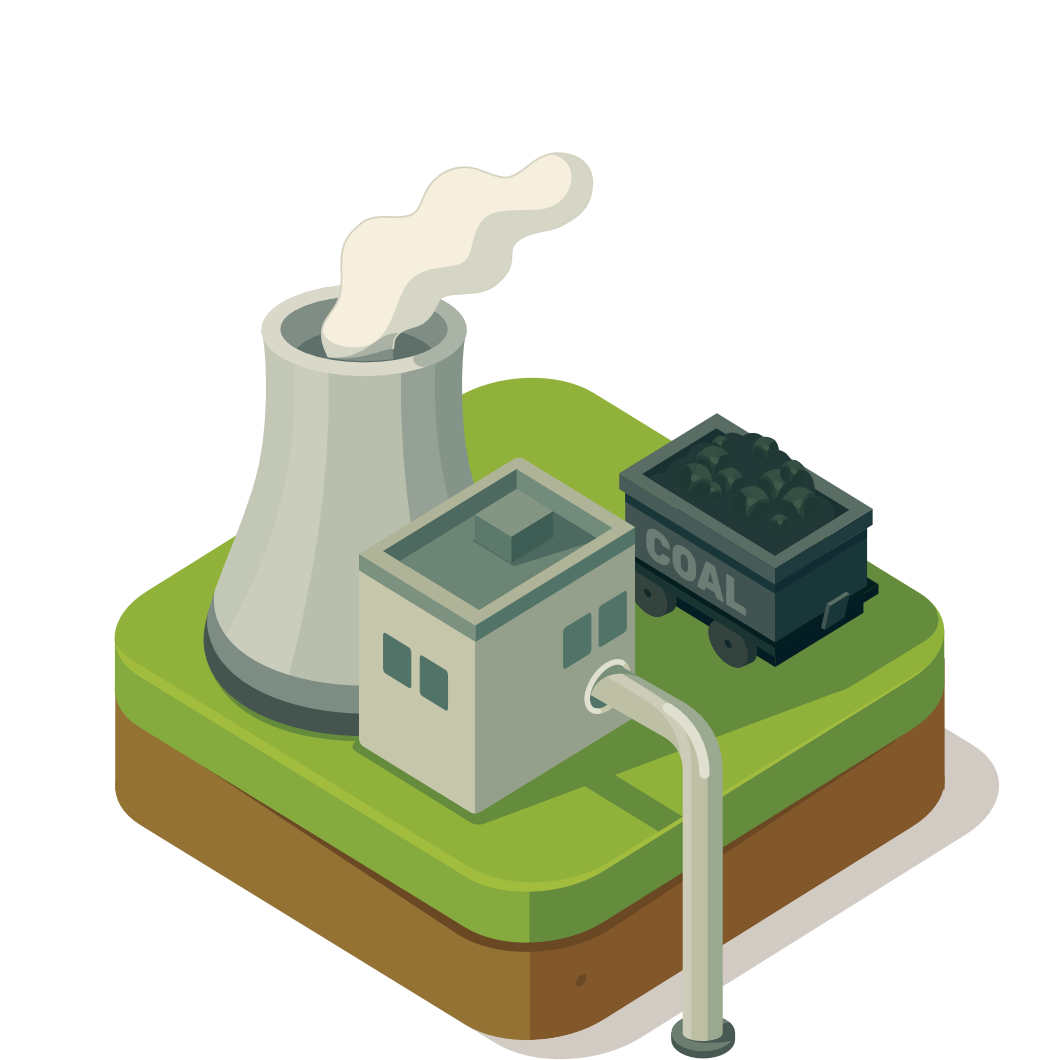 Retrofit coal plants with CCS
Retrofit coal plants with carbon capture and storage to generate 2,870 TWh of electricity per year (6.6% of global supply in 2050)
Retrofit coal plants with CCS
Retrofit coal plants with carbon capture and storage to generate 2,870 TWh of electricity per year (6.6% of global supply in 2050)
Adding carbon capture and storage (CCS) to coal power plants means fitting extra equipment that separates CO₂ from the exhaust, then compressing it and transporting it to be injected deep underground for long-term storage. This can allow a plant to keep generating electricity while releasing much less CO₂ to the air: extending the lifetime of existing power plants and grid connections, while providing controllable electricity that can be dispatched when needed. However, CCS does not capture emissions from upstream fuel production and transportation or all emissions from the plant. It also uses energy to run the capture system, so the plant may need to burn more coal for the same delivered electricity (1).
Achieving one wedge requires retrofitting CCS at 400 GW of baseload plants by 2050 – roughly 13 large power stations per year until then. By 2050, these power plants would produce around one-quarter of all coal-fired electricity generated worldwide in 2024 (10,600 TWh) (2). Today there are only a few CCS power plants operating, producing <10 TWh per year, so this scale-up is hundreds of times larger (3).
Coal with CCS can deliver up to 2 wedges in total.
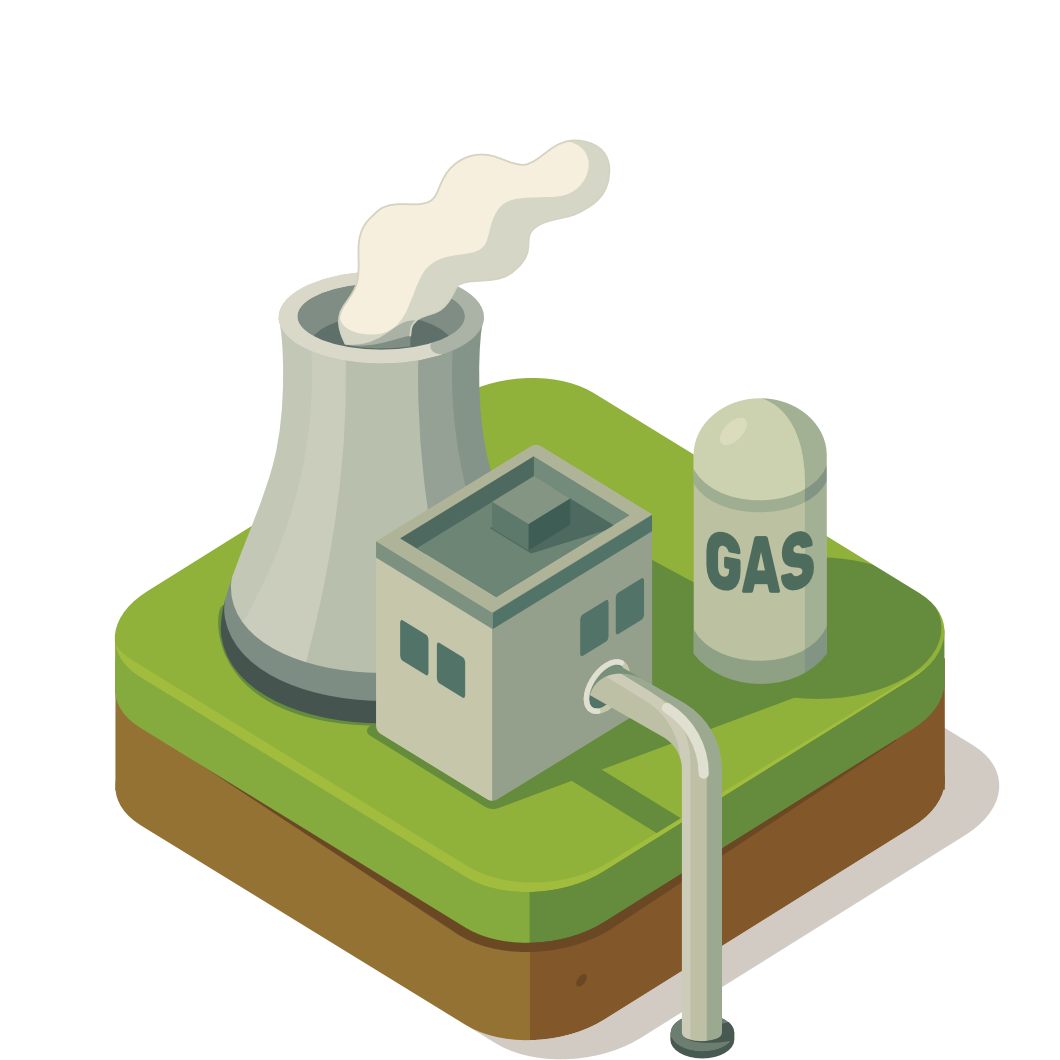 Retrofit gas plants with CCS
Retrofit gas plants with carbon capture and storage to generate 7,080 TWh of electricity per year (16% of global supply in 2050)
Retrofit gas plants with CCS
Retrofit gas plants with carbon capture and storage to generate 7,080 TWh of electricity per year (16% of global supply in 2050)
Adding carbon capture and storage (CCS) to gas power plants means fitting extra equipment that separates CO₂ from the exhaust, then compressing it and transporting it to be injected deep underground for long-term storage. This can allow a plant to keep generating electricity while releasing much less CO₂ to the air: extending the lifetime of existing power plants and grid connections, while providing controllable electricity that can be dispatched when needed. However, CCS does not capture emissions from upstream fuel production and transportation or all emissions from the plant. It also uses energy to run the capture system, so the plant may need to burn more gas for the same delivered electricity (1).
Achieving one wedge requires retrofitting CCS at 1 TW of baseload plants by 2050 – roughly 33 large power stations per year until then. By 2050, these power plants would produce almost all the gas-fired electricity generated worldwide in 2024 (7,100 TWh) (2). Today there are only a few CCS power plants operating, producing <10 TWh per year, so this scale-up is hundreds of times larger (3).
Gas with CCS can deliver up to 2 wedges in total.
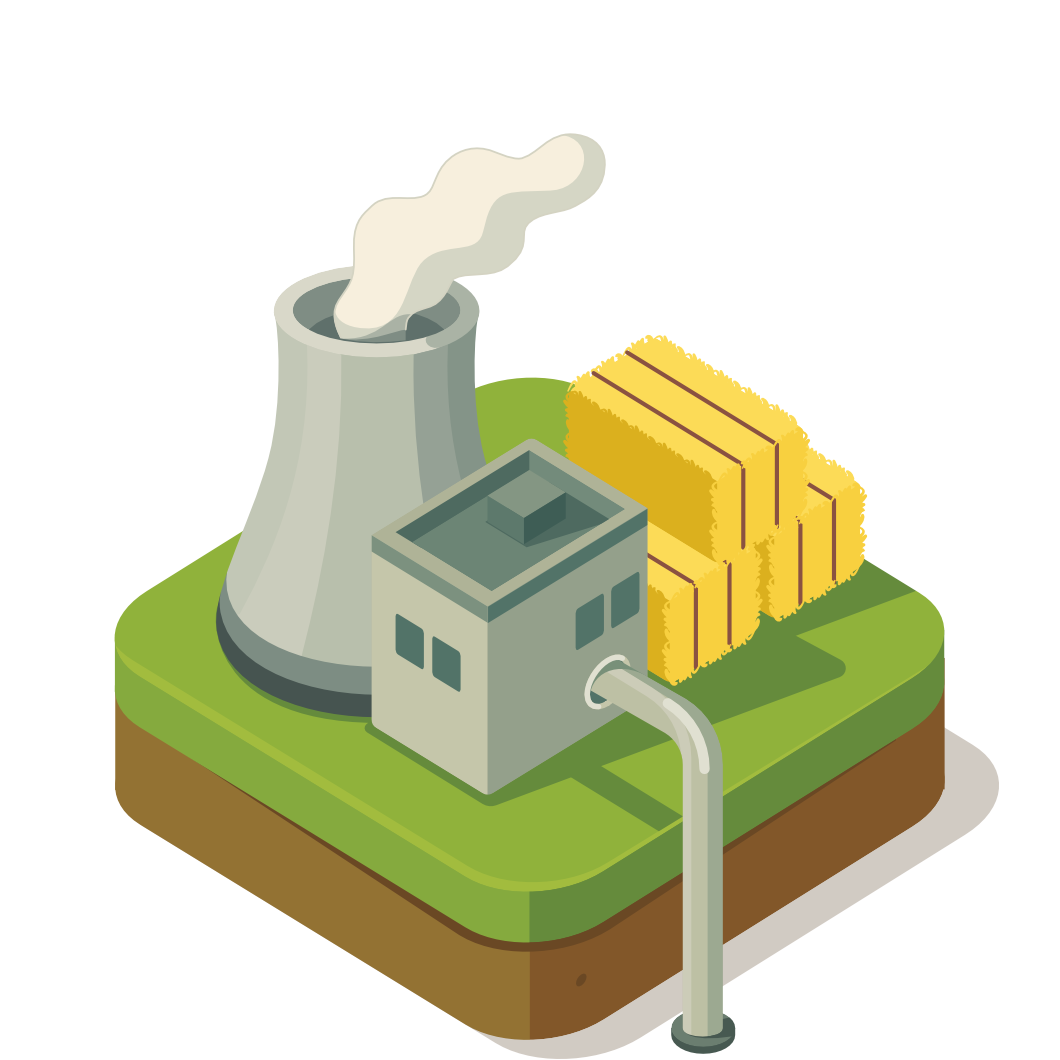 Power BECCS with waste
Power bioenergy with carbon capture and storage using waste to generate 1,570 TWh of electricity per year (3.6% of global supply in 2050)
Power BECCS with waste
Power bioenergy with carbon capture and storage using waste to generate 1,570 TWh of electricity per year (3.6% of global supply in 2050)
Bioenergy with carbon capture and storage (BECCS) produces electricity by burning plant material, separating CO₂ from the exhaust, then compressing it and transporting it to be injected deep underground for long-term storage. As plants absorb CO₂ while growing, storing that CO₂ can reduce the amount of CO₂ in the atmosphere overall – especially when the fuel is genuinely waste material like leftover straw, rather than crops grown on new land.
Achieving one wedge requires producing just over two times the electricity generated from bioenergy worldwide in 2024 (698 TWh) (1). This implies around 230 GW of new baseload BECCS capacity operating by 2050, meaning 8 GW must be built each year until then. Today there are only a few CCS power plants operating, producing <10 TWh per year, so this scale-up is hundreds of times larger (2). This requires around 0.8 Mt of waste straw, about 75% of globally available straw residues (3).
Bioenergy with CCS fuelled with waste can deliver up to 2 wedges in total.
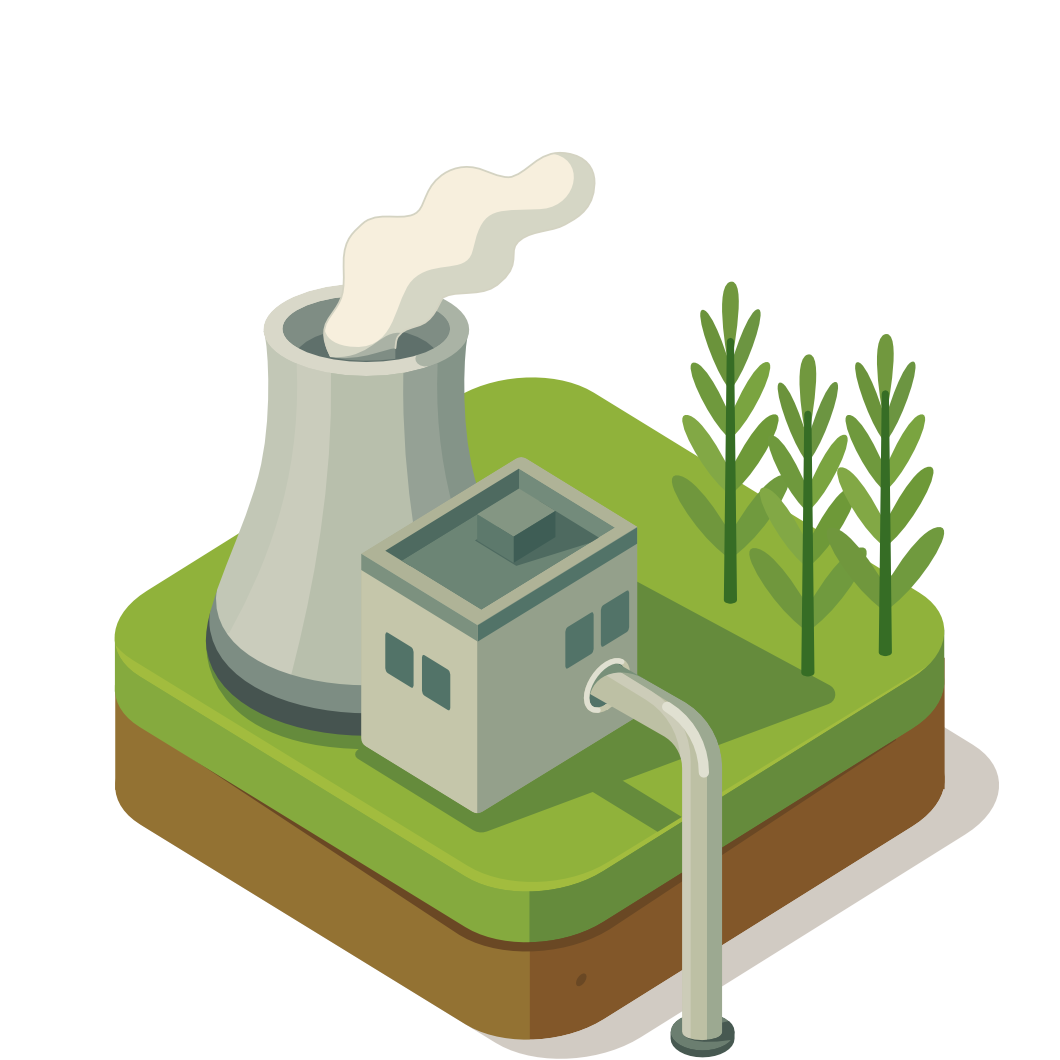 Power BECCS with crops
Power bioenergy with carbon capture and storage using crops to generate 1,960 TWh of electricity per year (4.5% of global supply in 2050)
Power BECCS with crops
Power bioenergy with carbon capture and storage using crops to generate 1,960 TWh of electricity per year (4.5% of global supply in 2050)
Bioenergy with carbon capture and storage (BECCS) produces electricity by burning plant material, separating CO₂ from the exhaust, then compressing it and transporting it to be injected deep underground for long-term storage. As plants absorb CO₂ while growing, storing that CO₂ can reduce the amount of CO₂ in the atmosphere overall – but only if the full supply chain is well managed. With purpose-grown energy crops, climate benefits are strongest when crops are grown on appropriate land (i.e., avoiding clearance of natural ecosystems) and managed with low-carbon farming practices (1).
Achieving one wedge requires producing almost three times the electricity generated from bioenergy worldwide in 2024 (698 TWh) (2). This implies around 280 GW of new baseload BECCS capacity operating by 2050, meaning 9 GW must be built each year until then. Today there are only a few CCS power plants operating, producing <10 TWh per year, so this scale-up is hundreds of times larger (3). The required crop energy input is 1 Gt, around one-third of solid biomass supply in 2020 (2.7 Gt) (4).
Bioenergy with CCS fuelled with energy crops can deliver up to 2 wedges in total.
Industry
There are 6 strategies that produce clean commodities, reduce emissions of trace gases, or capture carbon directly from the air.
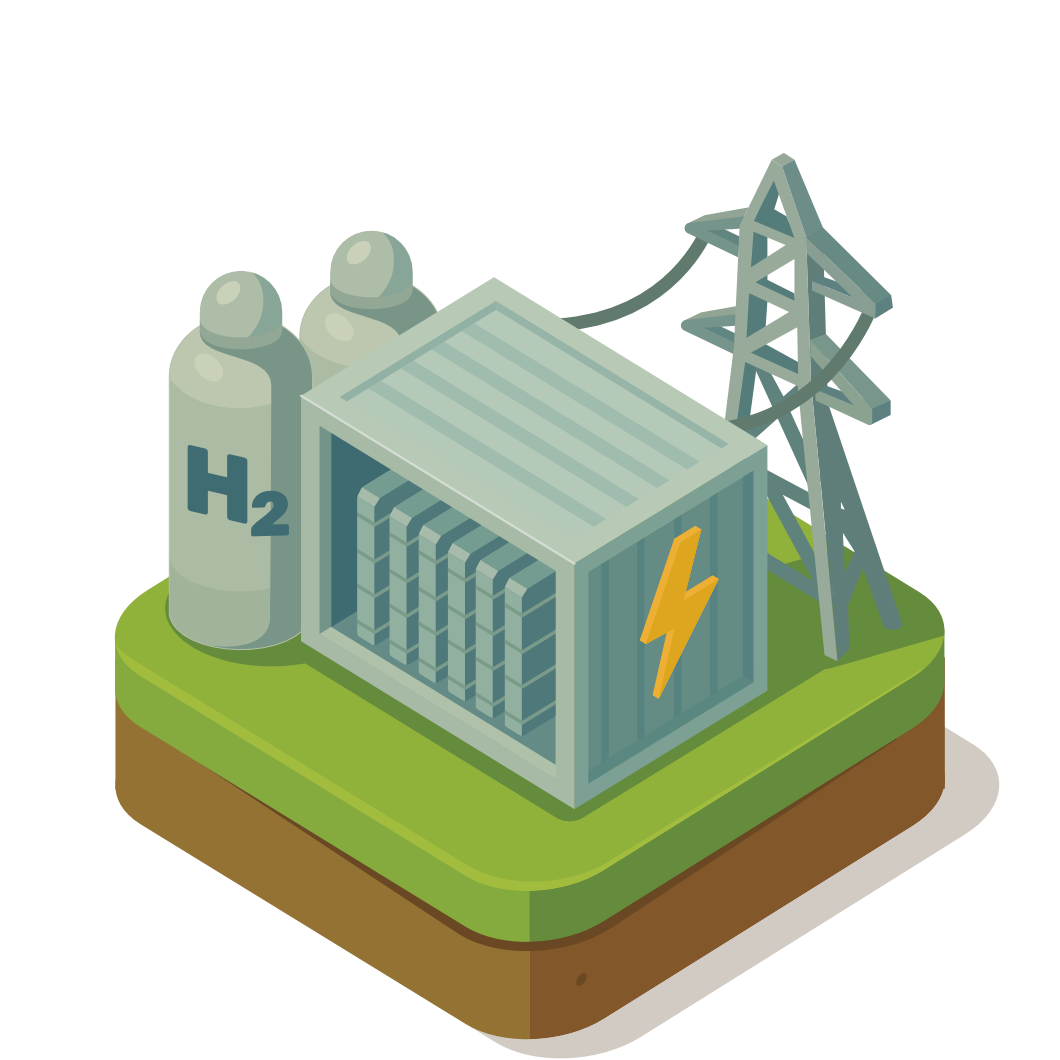 Produce clean hydrogen
Decarbonise 152 million tonnes of hydrogen production with electricity or carbon capture and storage (51% of global supply in 2050)
Produce clean hydrogen
Decarbonise 152 million tonnes of hydrogen production with electricity or carbon capture and storage (51% of global supply in 2050)
Hydrogen is an alternative to electricity that can replace fossil fuels in many sectors and end uses (1). Today, 99% of the world’s hydrogen is produced from fossil fuels, so cleaning up hydrogen supply can cut a large source of industrial emissions (especially in refining and chemicals) (2). If hydrogen use expands, it could also help to decarbonise heavy transport, high-temperature industrial heat, and other “hard-to-electrify” sectors (1).
Achieving one wedge requires producing about one-and-a-half times global hydrogen production in 2024 (100 Mt), which is over 150 times today’s clean hydrogen output (IEA). Electrolysis is expected to produce around two-thirds of this (1), which would need 5,100 TWh of clean electricity per year, more than the United States generated in 2024 (4,600 TWh) (3) – equivalent to 1.8 wedges of wind, solar or nuclear power. This implies around 600 GW of electrolyser capacity operating by 2050, meaning 20 GW must be built each year until then, roughly six times the 3.2 GW delivered in 2024 (4).
Clean hydrogen can deliver up to 4 wedges in total, if deployed broadly across economic sectors.
 Deploy direct air capture
Deploy direct air carbon capture and storage using 1,540 TWh of clean electricity per year (3.5% of global electricity supply in 2050)
Deploy direct air capture
Deploy direct air carbon capture and storage using 1,540 TWh of clean electricity per year (3.5% of global electricity supply in 2050)
Direct air capture (DAC) uses large fans and chemical filters to pull CO₂ directly out of the air, then concentrates and stores it deep underground. DAC is one of the few options for offsetting emissions that are very hard to eliminate (for example from some industrial processes or aviation). DAC is energy-intensive because CO₂ is very dilute in air, so it only delivers real climate benefits if it is powered by clean electricity and the captured CO₂ is permanently stored (1).
Achieving one wedge requires building 56,000 Mammoth-scale DAC plants (36,000 tonnes per year) (2). These plants would consume slightly more than all electricity sold to US households in 2024 (1,500 TWh) (3). As of 2024, DAC captured just 10,000 tonnes of CO₂ per year worldwide, so a wedge implies an increase of roughly 200,000 times (4). This implies around 180 GW of DAC capacity operating by 2050, meaning 6 GW must be built each year until then.
Direct air capture can deliver up to 2 wedges in total.
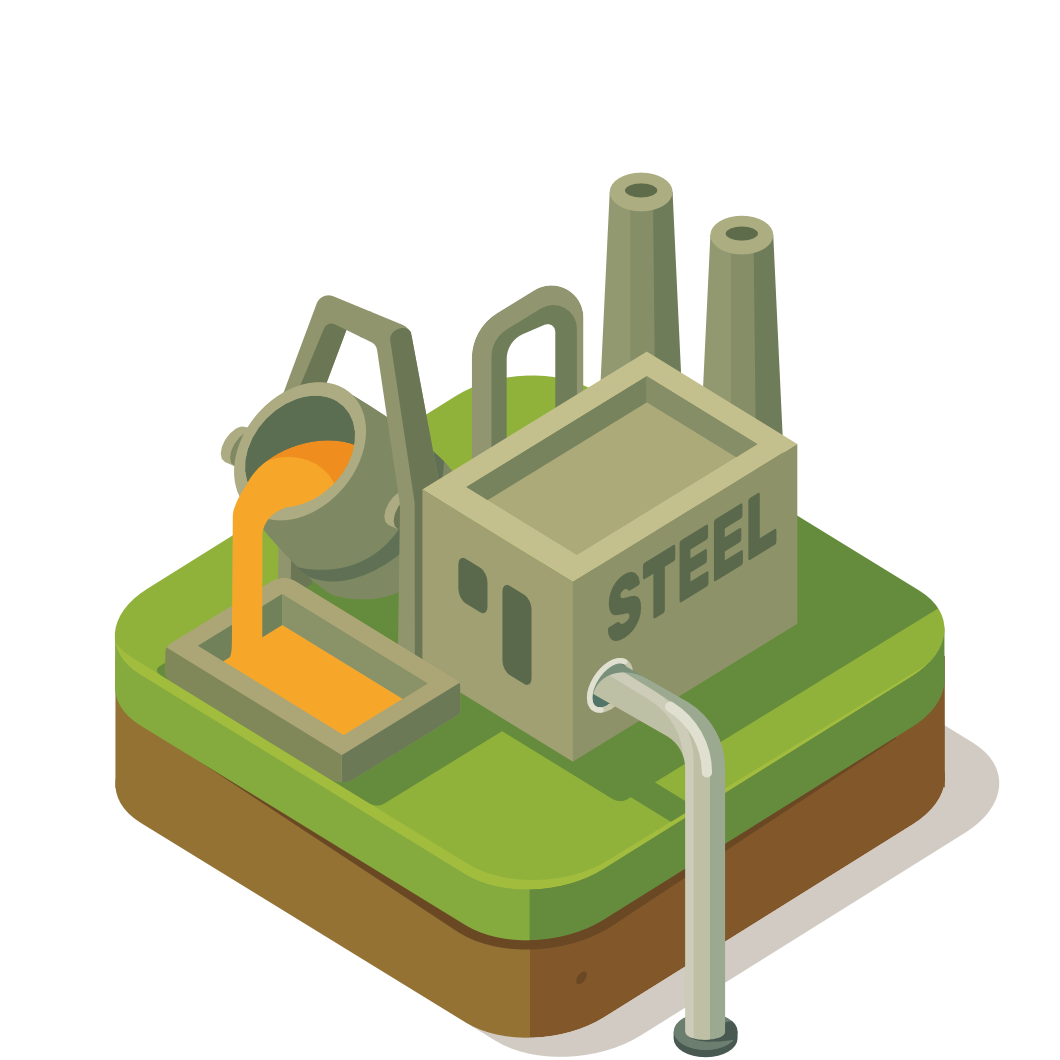 Decarbonise steelmaking
Decarbonise 1.3 billion tonnes of steel production using carbon capture and storage or hydrogen (39% of global supply in 2050)
Decarbonise steelmaking
Decarbonise 1.3 billion tonnes of steel production using carbon capture and storage or hydrogen (39% of global supply in 2050)
Steel is typically made in blast furnaces that use coal to strip oxygen from iron ore, which releases large amounts of CO₂. Steelmaking can be decarbonised using carbon capture and storage (CCS) or a combination of hydrogen and electricity. CCS involves fitting extra equipment to capture CO₂, then compressing it and transporting it to be injected deep underground for long-term storage. The hydrogen-electric alternative uses clean hydrogen to directly reduce iron ore and electricity in arc furnaces to melt and refine it (1).
Achieving one wedge requires decarbonising 1.3 Gt of steel production per year by 2050, or enough to build 1.6 billion cars per year or 50 per second (2). This implies that six large-integrated steel mills, like the Gary Works in Indiana, are converted each year until then. If using the hydrogen-electric process, a wedge requires around 4,100 TWh of clean electricity – roughly one-sixth of global generation in 2024 (31,250 TWh) (3) – or 1.5 wedges of wind, solar or nuclear power.
Low-carbon steel can deliver up to 2 wedges in total.
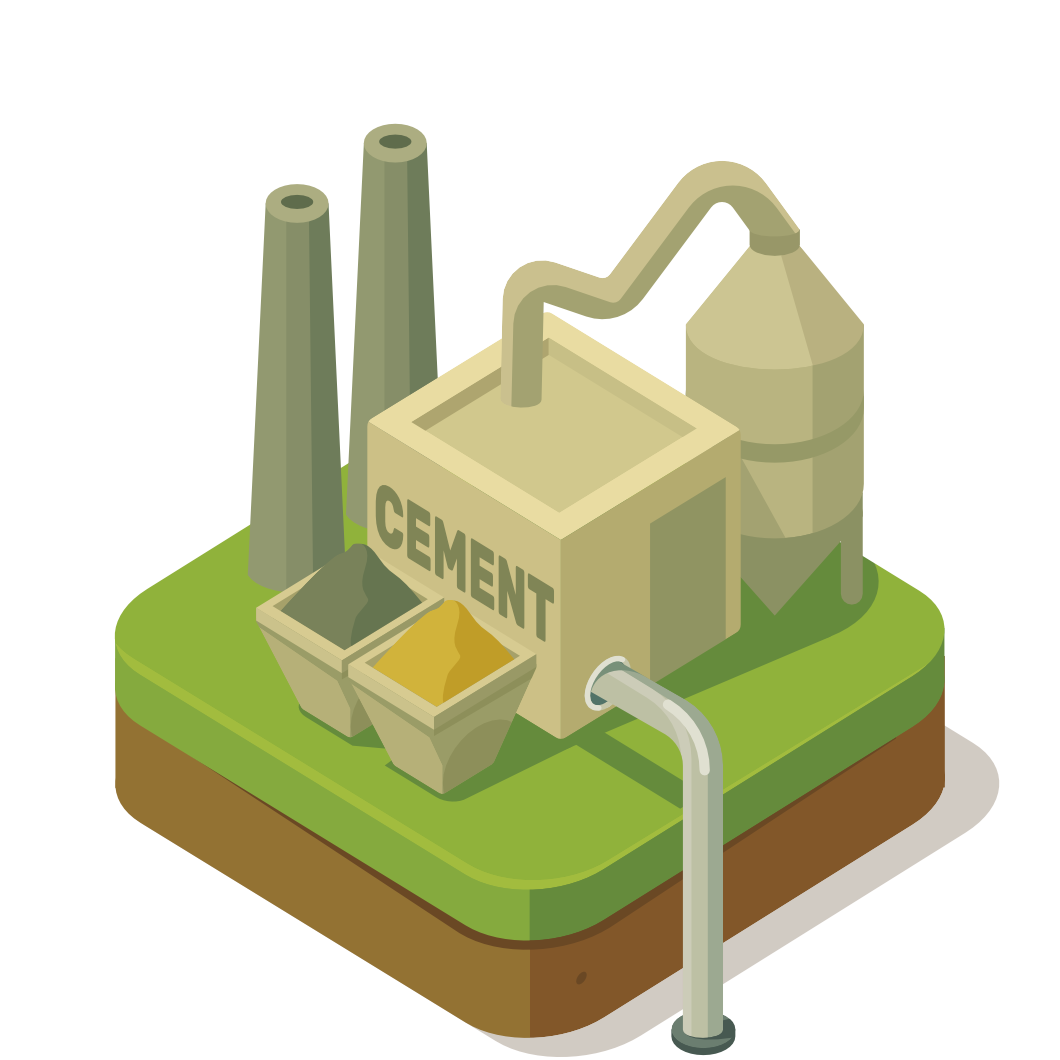 Decarbonise cement production
Decarbonise 5 billion tonnes of cement production with carbon capture and storage (93% of global supply in 2050)
Decarbonise cement production
Decarbonise 5 billion tonnes of cement production with carbon capture and storage (93% of global supply in 2050)
Cement is typically made by heating limestone in kilns to form clinker. Retrofitting cement plants with carbon capture and storage (CCS) means adding equipment that separates CO₂ from the kiln’s exhaust, then compressing it for transport and permanent storage deep underground. This targets cement’s biggest sources of CO₂ emissions: the chemical reaction that turns limestone into clinker (about 60% of direct emissions) and the fuels burned to reach very high temperatures (about 40%) (1). Although CCS can cut these on-site emissions, it does not remove emissions from mining, transport, or use of the cement.
Achieving one wedge requires fitting CCS at plants producing 5 Gt of cement per year by 2050, or enough to build a Three Gorges almost every day (2). This implies that CCS technology is fitted at around 30 large cement plants, like Sainte Geneveive in Missouri, each year until then.
Clean cement production can deliver 1 wedge in total.
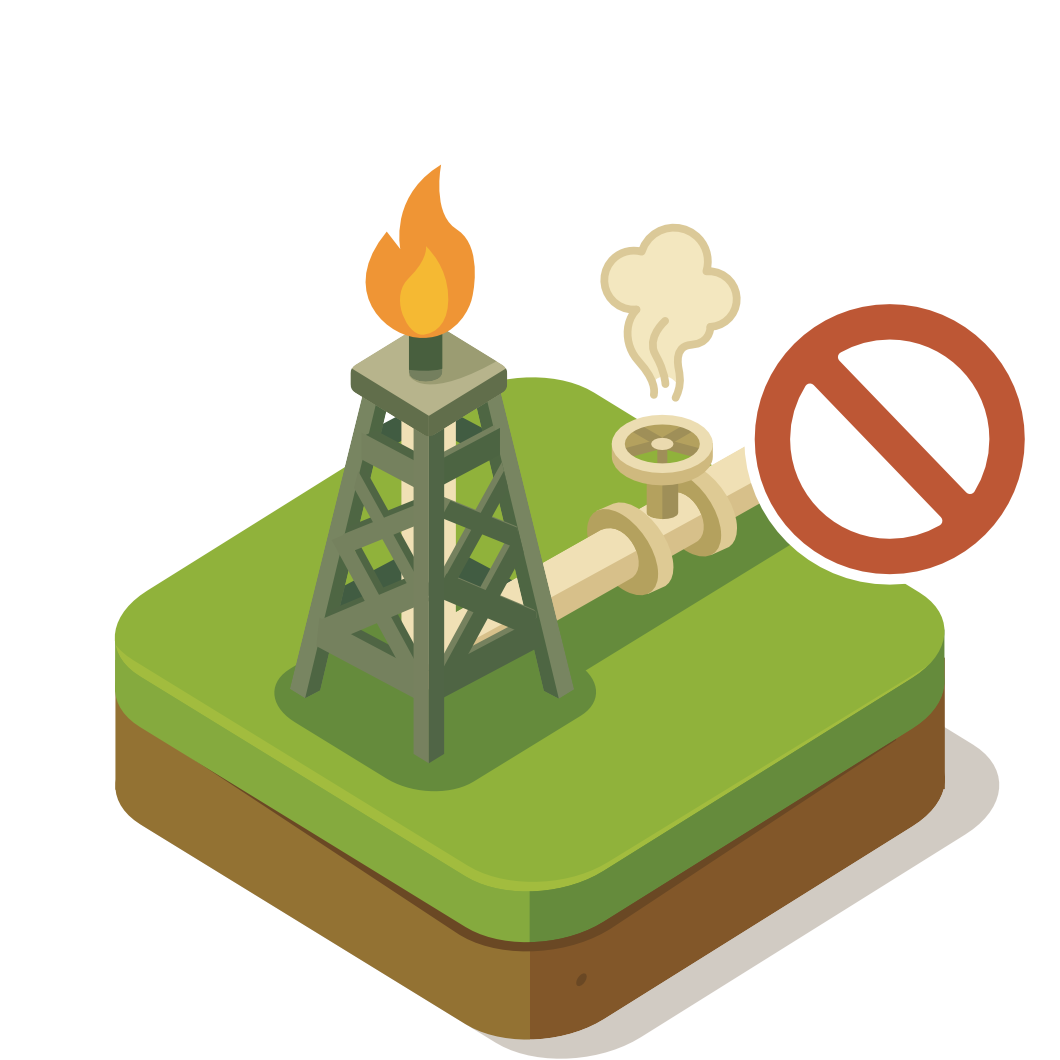 Reduce oil and gas methane emissions
Reduce methane emissions from oil and gas production by 1 billion tonnes of methane (44%) cumulatively to 2050
Reduce oil and gas methane emissions
Reduce methane emissions from oil and gas production by 1 billion tonnes of methane (44%) cumulatively to 2050
Oil and gas production releases methane, which is a powerful greenhouse gas (30-80 times the warming impact of CO₂). Methane can leak, be vented, or be incompletely flared at oil and gas wells, processing plants, pipelines, and other parts of the supply chain. Many fixes are practical: regular leak detection and repair, replacing high-leak valves and pneumatic devices, capturing gas that would be vented, and improving flaring performance. Because the leaked gas is also a valuable fuel, a substantial share of methane can be avoided at low or no net cost (1).
Achieving one wedge requires cutting 1 billion tonnes of methane, almost half of all emissions, cumulatively to 2050. That’s equivalent to reducing baseline methane emissions by around 3% each year out to 2050. Oil operations emitted ~45 Mt methane in 2024 and gas operations ~35 Mt (≈80 Mt total), so 1 billion tonnes is about 12–13 years of today’s oil-and-gas methane emissions (2).
Reducing methane emissions from oil and gas can deliver up to 2 wedges in total.
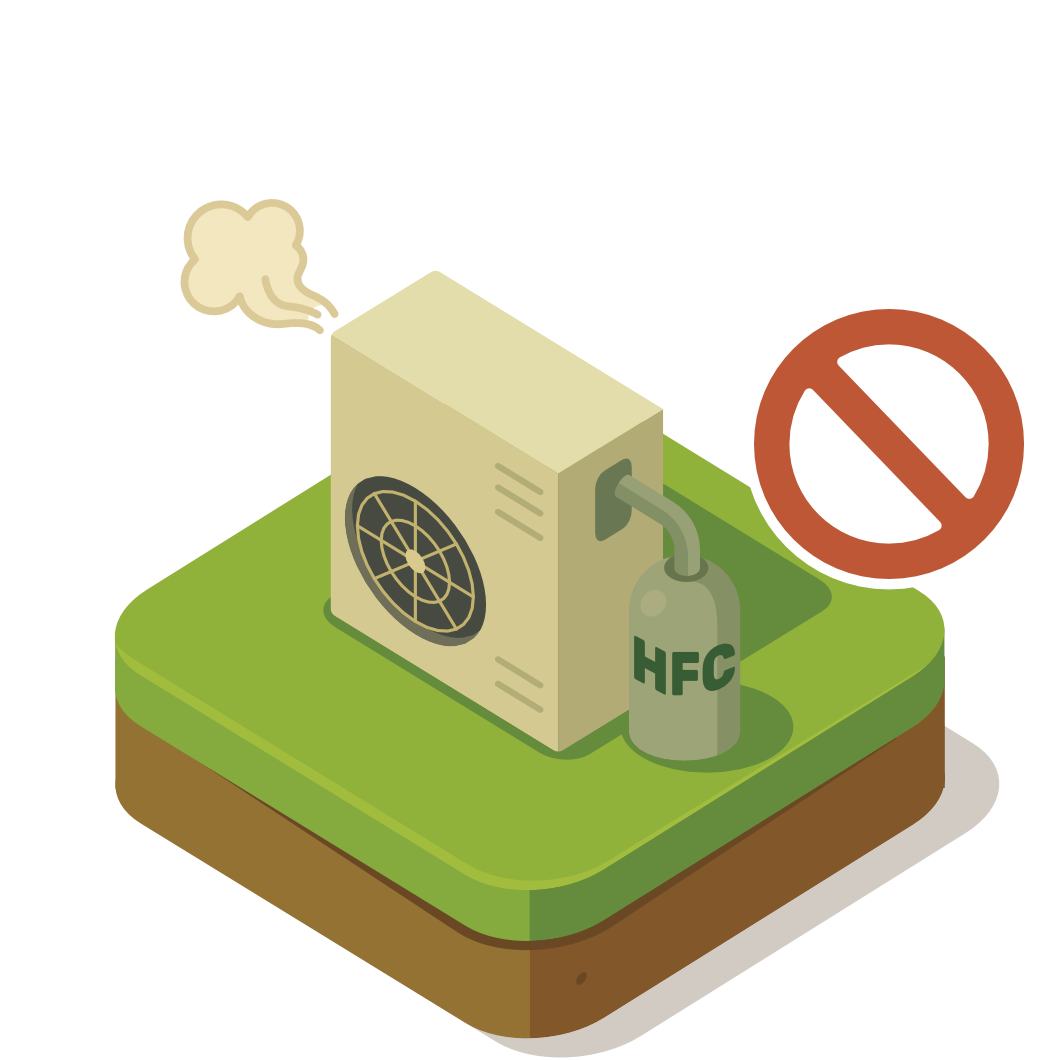 Reduce refrigerant emissions
Reduce hydrofluorocarbon emissions by 13.6 million tonnes (65%) cumulatively to 2050
Reduce refrigerant emissions
Reduce hydrofluorocarbon emissions by 13.6 million tonnes (65%) cumulatively to 2050
Hydrofluorocarbon (HFC) refrigerants are used in fridges, air conditioners and heat pumps. If they leak during manufacture, servicing, use, or disposal, they contribute strongly to global warming, as common HFCs have a climate impact 1,000 to 15,000 times stronger than CO₂. These impacts can be reduced by switching to low-GWP alternatives, improving equipment to prevent leaks, and recovering and destroying gases at end of life (1).
Achieving one wedge requires avoiding two-thirds of the HFC emissions that are still allowed under global regulations. The Montreal Protocol phased out ozone-depleting chemicals, and in 2016 it was amended to include HFCs. Its planned schedule would allow the equivalent of around 46 billion tonnes of CO₂ to be released between 2020 and 2050 (2), two-third of which equates to a wedge. For context, there are over 5 billion refrigeration systems in operation worldwide (3), and ten air conditioners are expected to be sold every second between now and 2050 (4).
Reducing refrigerant emissions can deliver 1 wedge in total.
Land and Food
There are 12 strategies that involve restoring or protecting nature, or reducing how much land we need for agriculture.
 Reduce tropical forest loss
Reduce tropical deforestation by 5 million hectares per year (39% of the historical rate)
Reduce tropical forest loss
Reduce tropical deforestation by 5 million hectares per year (39% of the historical rate)
Tropical forests store huge amounts of carbon in trees and soils. When forests are cleared or degraded, that carbon is released quickly if trees are burned, and more slowly as vegetation and disturbed soils decay. Reducing deforestation and forest degradation therefore avoids emissions that would have happened otherwise, and it keeps forests standing so they can continue absorbing some CO₂ as they grow.
Achieving one wedge requires avoiding 75 million hectares of forest loss over 30 years, an area about the size of Pakistan (1). By 2050, 5 million hectares of tropical forest must be avoided annually – an area about the size of Costa Rica (2). This is roughly a 40% reduction relative to the historical rate (13 million hectares) (3), which is a similar order to that achieved in the Brazilian Amazon: deforestation fell about 34% in the first half of 2023 versus the same period in 2022 (4).
Reducing deforestation can deliver up to 2 wedges in total.
 Rewet drained peatlands
Completely phase-out peatland drainage and rewet tropical peatlands by restoring 18 million hectares (89% of current drained area)
Rewet drained peatlands
Completely phase-out peatland drainage and rewet tropical peatlands by restoring 18 million hectares (89% of current drained area)
Peatlands are waterlogged wetlands that build up decaying plant material (peat) over centuries, and store vast amounts of carbon. Peatlands cover only ~3–4% of Earth’s land but contain about twice the carbon found in the world’s forests (1). When peatlands are drained the water table is lowered and oxygen can reach the peat, so it decomposes and releases the stored carbon to the atmosphere. Rewetting reverses this drainage, which slows decomposition and can also reduce the risk of severe peat fires.
Achieving one wedge requires both stopping the roughly half a million hectares of new drainage that occurs in the tropics each year (2), and rewetting an area of tropical peatland roughly the size of Cambodia (0.2 million km²) (3). Around 50 million hectares of peatlands have been drained across all biomes globally, so a wedge would restore roughly one-third of this (4).
Rewetting peatlands and preventing further drainage can deliver 1 wedge in total.
 Reforest the tropics
Expand tropical tropics by 104 million hectares (6.6% of current tropical forest area)
Reforest the tropics
Expand tropical tropics by 104 million hectares (6.6% of current tropical forest area)
Forests cover around 50% of global land area in the tropical biome (1, 2). Reforesting the tropics means bringing forests back to places that have been cleared or degraded. As new forests grow, they remove CO₂ from the air and store it in trunks, roots, leaf litter and soils – a form of “carbon dioxide removal”. The climate benefit builds up over decades, and it lasts only if the forests are protected from future loss (for example from logging, fires, pests or drought) (3).
Achieving one wedge requires creating new forest about the size of Colombia (1.1 million km²) (4). Put another way, it’s about 2.6% of today’s total global forest area (4.06 billion hectares) (5). For comparison, the Bonn Challenge aimed to bring 12 million hectares of degraded and deforested land into restoration each year, so a wedge is roughly 30% of that global target (6).
Tropical reforestation can deliver up to 2 wedges in total.
 Reforest the temperate zone
Expand temperate forests by 143 million hectares (23% of current temperate forest area)
Reforest the temperate zone
Expand temperate forests by 143 million hectares (23% of current temperate forest area)
Forests cover 37% of global land area in the temperate biome (1, 2). Reforesting the temperate zone means bringing forests back to places that have been cleared or degraded. As new forests grow, they remove CO₂ from the air and store it in trunks, roots, leaf litter and soils – a form of “carbon dioxide removal”. The climate benefit builds up over decades, and it lasts only if the forests are protected from future loss (for example from logging, fires, pests or drought) (3).
Achieving one wedge requires creating new forest that spans roughly the land area of Mongolia (1.6 million km²) (4). Put another way, it’s about 3.5% of today’s total global forest area (4.06 billion hectares) (5). For comparison, the Bonn Challenge aimed to bring 12 million hectares of degraded and deforested land into restoration each year, so a wedge is roughly 40% of that global target (6).
Temperate reforestation can deliver 1 wedge in total.
 Add trees to tropical pasture
Add trees to 129 million hectares of tropical pasture (30% of current area)
Add trees to tropical pasture
Add trees to 129 million hectares of tropical pasture (30% of current area)
Silvopasture involves grazing livestock among trees and shrubs, rather than on open grassland. The trees store carbon in wood and help build soil carbon through roots and leaf litter, so the land can remove CO₂ from the air over time. Trees can also improve pasture conditions (shade, shelter, sometimes fodder), which can raise productivity per hectare and reduce pressure to clear additional land elsewhere, but the climate benefit depends on trees being maintained for decades (1).
Achieving one wedge requires adding trees across a grazing area roughly the size of Peru (1.3 million km²) (2). All forms of agroforestry combined are practised on around 1 billion hectares globally, so this wedge implies expanding tree-on-farm systems by roughly 13% from today’s footprint (3).
Tropical silvopasture can deliver 1 wedge in total.
 Add trees to temperate pasture
Add trees to 175 million hectares of temperate pasture (64% of current area)
Add trees to temperate pasture
Add trees to 175 million hectares of temperate pasture (64% of current area)
Silvopasture involves grazing livestock among trees and shrubs, rather than on open grassland. The trees store carbon in wood and help build soil carbon through roots and leaf litter, so the land can remove CO₂ from the air over time. Trees can also improve pasture conditions (shade, shelter, sometimes fodder), which can raise productivity per hectare and reduce pressure to clear additional land elsewhere, but the climate benefit depends on trees being maintained for decades (1).
Achieving one wedge requires adding trees across a grazing area roughly the size of Iran (1.6 million km²) (2). All forms of agroforestry combined are practiced on around 1 billion hectares globally, so this wedge implies expanding tree-on-farm systems by roughly 18% from today’s footprint (3).
Temperate silvopasture can deliver 1 wedge in total.
 Add trees to tropical cropland
Add trees to 152 million hectares of tropical cropland (36% of current area)
Add trees to tropical cropland
Add trees to 152 million hectares of tropical cropland (36% of current area)
Adding trees to tropical cropland is a form of agroforestry, where farmers grow crops alongside trees or shrubs (for example, shelterbelts, hedgerows, or “alley cropping”). The trees store carbon in wood and help build soil carbon through roots and leaf litter, so the land can remove CO₂ from the air over time. Tree cover can also protect soils (for example by reducing erosion) and create microclimates that help crops cope with heat and drought, but the climate benefit depends on trees being maintained for decades.
Achieving one wedge requires adding trees to croplands roughly the combined size of Thailand (0.5 million km²) and Tanzania (0. 9 million km²) combined (1). All forms of agroforestry combined are practised on around 1 billion hectares globally, so this wedge implies expanding tree-on-farm systems by roughly 15% from today’s footprint (2).
Tropical intercropping can deliver 1 wedge in total.
 Add trees to temperate cropland
Add trees to 339 million hectares of temperate cropland (80% of current area)
Add trees to temperate cropland
Add trees to 339 million hectares of temperate cropland (80% of current area)
Adding trees to temperate cropland is a form of agroforestry, where farmers grow crops alongside trees or shrubs (for example, shelterbelts, hedgerows, or “alley cropping”). The trees store carbon in wood and help build soil carbon through roots and leaf litter, so the land can remove CO₂ from the air over time. Tree cover can also protect soils (for example by reducing erosion) and create microclimates that help crops cope with heat and drought, but the climate benefit depends on trees being maintained for decades.
Achieving one wedge requires adding trees to cropland roughly the combined size of Mexico (2.0 million km²) and Mongolia (1.6 million km²) (1). All forms of agroforestry combined are practised on around 1 billion hectares globally, so this wedge implies expanding tree-on-farm systems by roughly 34% from today’s footprint (2).
Temperate intercropping can deliver 1 wedge in total.
 Waste less food
Reduce food loss and waste by 1.38 billion tonnes per year (51% of global food lost or wasted in 2050)
Waste less food
Reduce food loss and waste by 1.38 billion tonnes per year (51% of global food lost or wasted in 2050)
Around one third of all food produced globally does not get eaten. Losses happen “upstream” when crops spoil during harvesting, storage and transport, especially where cooling, roads and storage are limited, while waste happens “downstream” in shops, restaurants and homes when food is thrown out. Producing food requires land, fertiliser, energy, and transport which all produce emissions. Cutting food loss and waste reduces the need to produce extra food in the first place and avoids all associated emissions.
Achieving one wedge requires avoiding just over half of the 2.5 billion tonnes of food that is lost or wasted globally today (1). For perspective, this is roughly 8 times the amount of food consumed in the US in 2024 (169 million tonnes) (2).
Reducing food loss and waste can deliver up to 2 wedges in total.
 Eat less meat
In regions which over-consume, reduce meat consumption by 126 calories per person per day (reducing intake by 31%)
Eat less meat
In regions which over-consume, reduce meat consumption by 126 calories per person per day (reducing intake by 31%)
Eating meat causes more emissions than other diets because livestock production (especially for cattle and sheep) releases large amounts of greenhouse gases and uses a lot of energy and land to grow feed. Eating less meat cuts emissions mainly by reducing demand for these animals, and thus the amount of energy and land devoted to rearing them. People in many parts of the world eat more meat than is healthy (1), so shifting diets can have a meaningful climate impact while improving public health.
Achieving one wedge requires people to reduce their meat consumption by about 6% of a 2,000-calorie diet each day (2). This must be adopted by 5.2 billion people by 2050. In food terms, it’s like skipping about half of a typical 100 g beef burger patty each day (about 270 calories) (3). If those calories are avoided rather than replaced diets move closer to health-focused benchmarks, which suggest around 92 kcal of meat per day total (4). If calories are instead replaced with meat-free alternatives, emissions savings are lower.
Reducing meat consumption can deliver up to 3 wedges in total.
 Apply soil carbon management
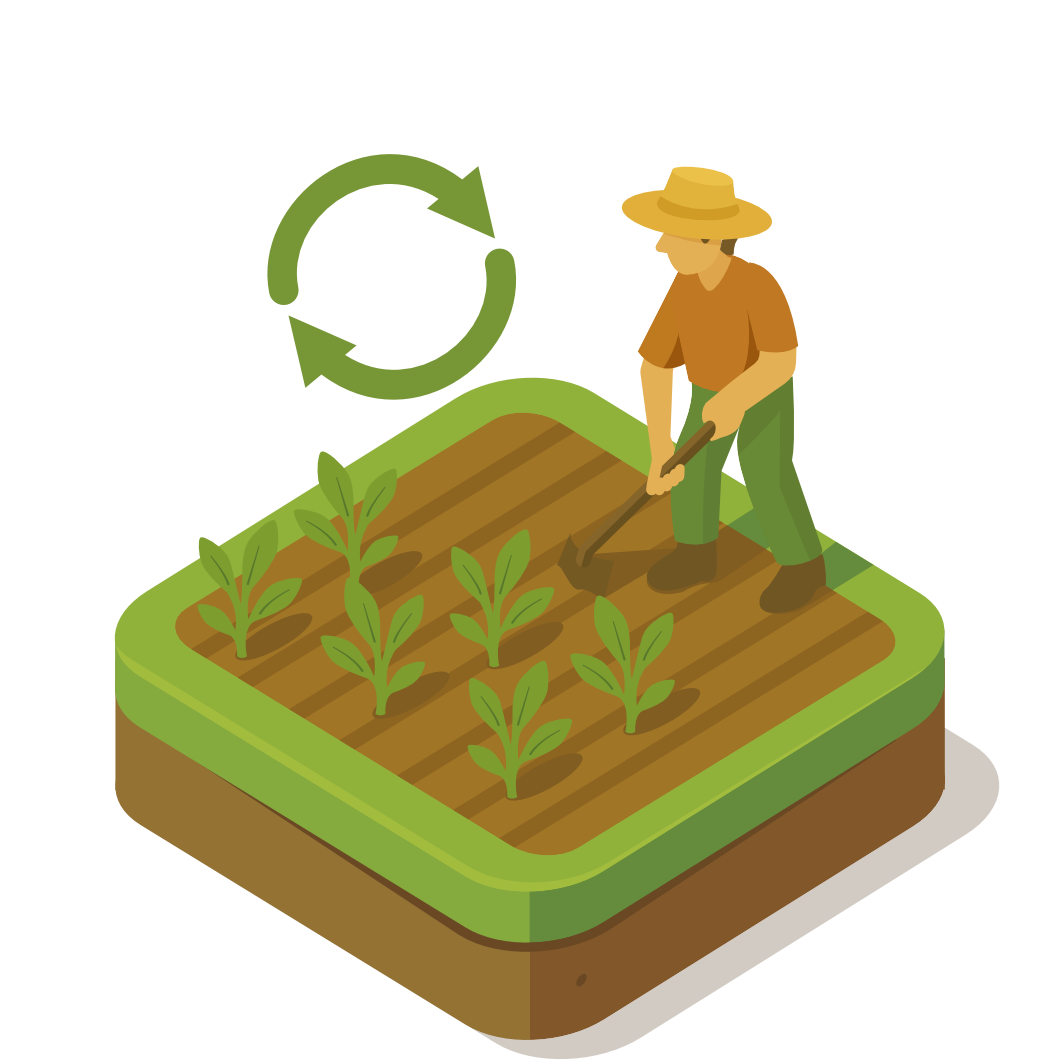
Use soil carbon management on 904 million hectares of cropland (56% of current global area)
Apply soil carbon management
Use soil carbon management on 904 million hectares of cropland (56% of current global area)
Earth’s soils store roughly two trillion tonnes of organic carbon, which is equivalent to 7,300 GtCO₂ (1). Changing how cropland is farmed can allow more carbon to stay in the soil instead of returning to the air as CO₂ when oxidised. Often referred to as “conservation agriculture”, practices include reducing or avoiding ploughing, keeping the soil covered (for example with crop residues or cover crops), and using more diverse rotations (2). Results vary a lot by climate and soil: some “no-till” gains near the surface can be offset deeper down, while cover crops tend to show more consistent increases in soil carbon (3).
Achieving one wedge requires applying these kinds of practices across roughly the land area of the United States (9.1 million km²) (4). This is around 4 times larger than the estimated global area currently under conservation agriculture: 205 million hectares in 2019 (about 15% of global cropland) (5).
Soil carbon management can deliver 1 wedge in total.
 Apply enhanced weathering
 to 320 million hectares of cropland (20% of global cropland area)
Apply enhanced weathering
Apply enhanced weathering to 320 million hectares of cropland (20% of global cropland area)
Spreading finely crushed silicate rocks (such as basalt) over farmland speeds up natural chemical reactions that remove CO₂ from the air. As the rock dust dissolves in rainwater and soils, it forms carbonates that wash into rivers and eventually the ocean, where the carbon can be stored in long-lived, stable forms. Many farmers already spread crushed limestone on fields to reduce soil acidity, so the machinery and know-how for large-scale spreading is already familiar (1).
Achieving one wedge requires treating a total cropland across an area of roughly the size of India (3.2 million km²), if applied to regions with the greatest potential (2). The twelve countries with the greatest potential, including China and the US, would need to apply weathering materials across 35-55% of their croplands. This requires 13 billion tonnes of crushed rock to be distributed each year, which is roughly 1.5× the world’s coal demand in 2024 (8.8 billion tonnes) (3). The energy consumed for rock crushing along would consume up to 3% of current electricity supply in each country (4).
Enhanced weathering can deliver 1 wedge in total.
Buildings
There are 3 strategies to improve how we heat buildings or provide heat for cooking.
 Install more heat pumps
Install heat pumps to deliver 5,050 TWh of heat per year (38% of global building heat)
Install more heat pumps
Install heat pumps to deliver 5,050 TWh of heat per year (38% of global building heat)
Heat pumps move heat from outside air, the ground or water into buildings (like a fridge or air conditioner working in reverse). Because they move heat rather than create it by burning fuel, modern heat pumps can deliver 3–5 units of heat for each unit of electricity. When that electricity is low-carbon, heat pumps can cut emissions from space and water heating sharply compared with gas, oil or coal boilers (1).
Achieving one wedge requires heat pumps to provide about four times their current global contribution: in 2023 they met just over 10% of buildings’ heating needs (1). Operating these heat pumps would require around 1,300 TWh of clean electricity (~0.4 wedges of wind, solar or nuclear power), which is roughly half of the EU’s total electricity generation in 2024 (2,800 TWh) (2).
Heat pumps can deliver up to 2 wedges in total.
 Reduce building heat transfer
Insulate buildings to reduce heat transfer to 0.75 W/m²K (doubling the global average insulation level)
Reduce building heat transfer
Insulate buildings to reduce heat transfer to 0.75 W/m²K (doubling the global average insulation level)
Improving the “fabric” of buildings with more insulation, draughtproofing, and better windows allows less heat to escape in winter, and less unwanted heat to enter in summer. Because heating and cooling are a major source of emissions in many countries, reducing demand lowers the amount of fuel burned in boilers and electricity required for air conditioning, making it easier to decarbonise buildings overall.
Achieving one wedge requires roughly halving average heat transfer, from a global average of about 1.5 to 0.75 W per m² per degree C. This is similar to insulating an unfilled cavity wall with cavity fill and a thermal plasterboard (1). In comparison, high-performance standards like Passivhaus can deliver a 10-fold improvement (~0.15 W/m²K) (2). Achieving improvements at global scale implies sustained, high retrofit rates in addition to new buildings being designed to tight insulation standards.
Insulating buildings can deliver 1 wedge in total.
 Deploy clean cookstoves
Deploy 660 million clean cookstoves immediately (replacing 73% of the current global stock)
Deploy clean cookstoves
Deploy 660 million clean cookstoves immediately (replacing 73% of the current global stock)
Clean cookstoves cut emissions by burning fuel more completely and using less of it to cook the same meal. That reduces CO₂ from harvesting and burning wood/charcoal (especially where biomass is not sustainably replenished), and also cuts climate-warming pollutants from incomplete combustion, such as methane and black carbon. “Clean cooking” can also allow switching away from solid fuels entirely (for example to LPG, biogas or electricity), which can further reduce emissions (1). Around 2.3 billion people (600 million households) use “unimproved” open fires or basic stoves (2).
Achieving one wedge requires all of the world’s “unimproved” stoves to be replaced with clean stoves immediately. Just over 300 million clean cookstoves have been deployed globally, and so tripling the current global stock would be sufficient for a wedge (3).
Clean cookstoves can deliver 1 wedge in total.
Transport
There are 7 strategies that avoid travel, shift it to cleaner modes, or improve the efficiency of it.
 Decarbonise surface freight
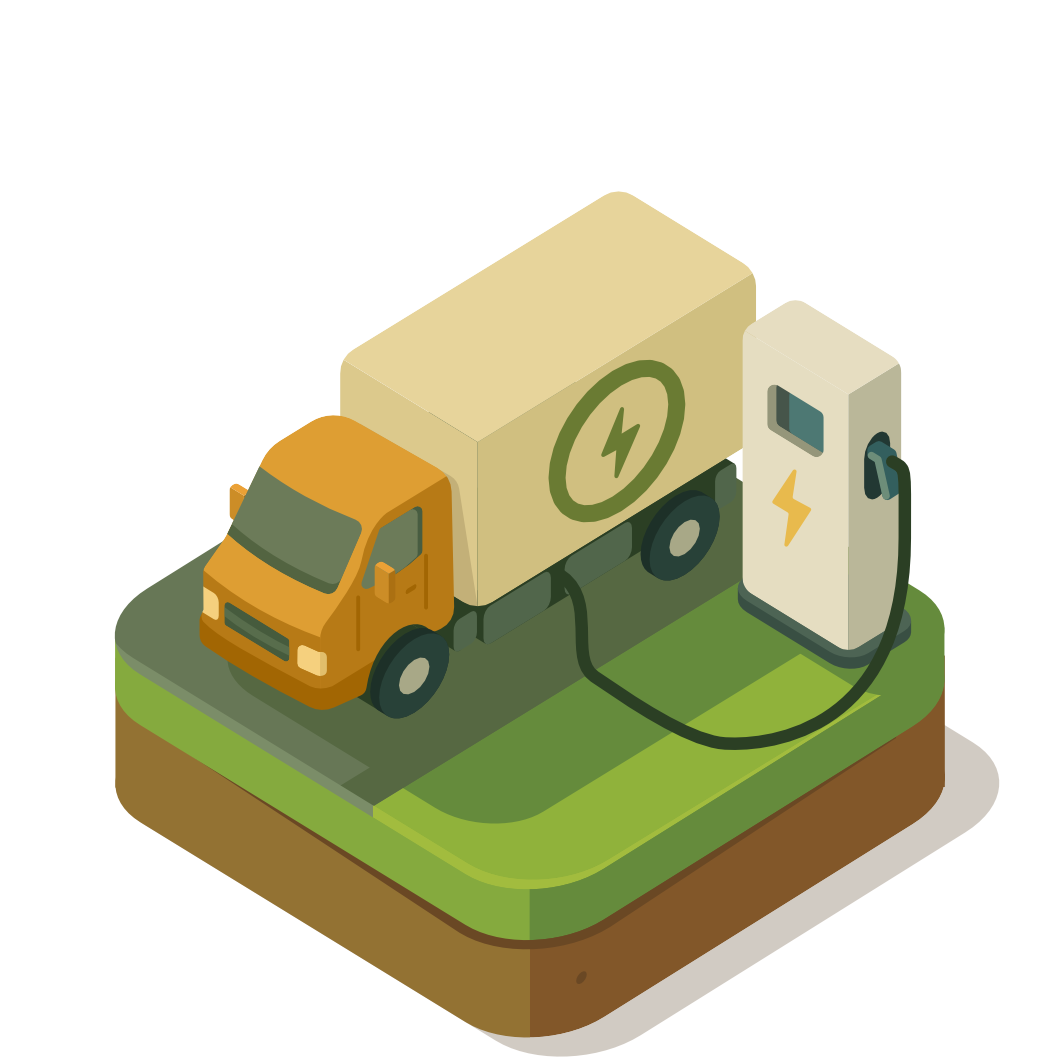
Use low-carbon freight transport to reduce emissions by 2 billion tonnes of CO₂ (36% of global freight emissions in 2050)
Decarbonise surface freight
Use low-carbon freight transport to reduce emissions by 2 billion tonnes of CO₂ (36% of global freight emissions in 2050)
Freight transport over land and sea can be decarbonised by shifting to lower-carbon modes (from trucks to railways), improving the powertrains of trucks and ships to zero-emission options such as batteries and hydrogen, and using more efficient vehicles and logistics. Cutting emissions also depends on using low-carbon energy sources to power vehicles (clean electricity, clean hydrogen, or other fuels) (1).
Achieving one wedge requires emissions from surface freight to fall from 5.7 to 3.7 GtCO₂e in 2050, relative to 4.1 GtCO₂e in 2020. This means shifting from +1.1% growth per year to -0.34% decline per year over 30 years.
Decarbonising surface freight can deliver up to 2 wedges in total.
 Deploy more electric vehicles
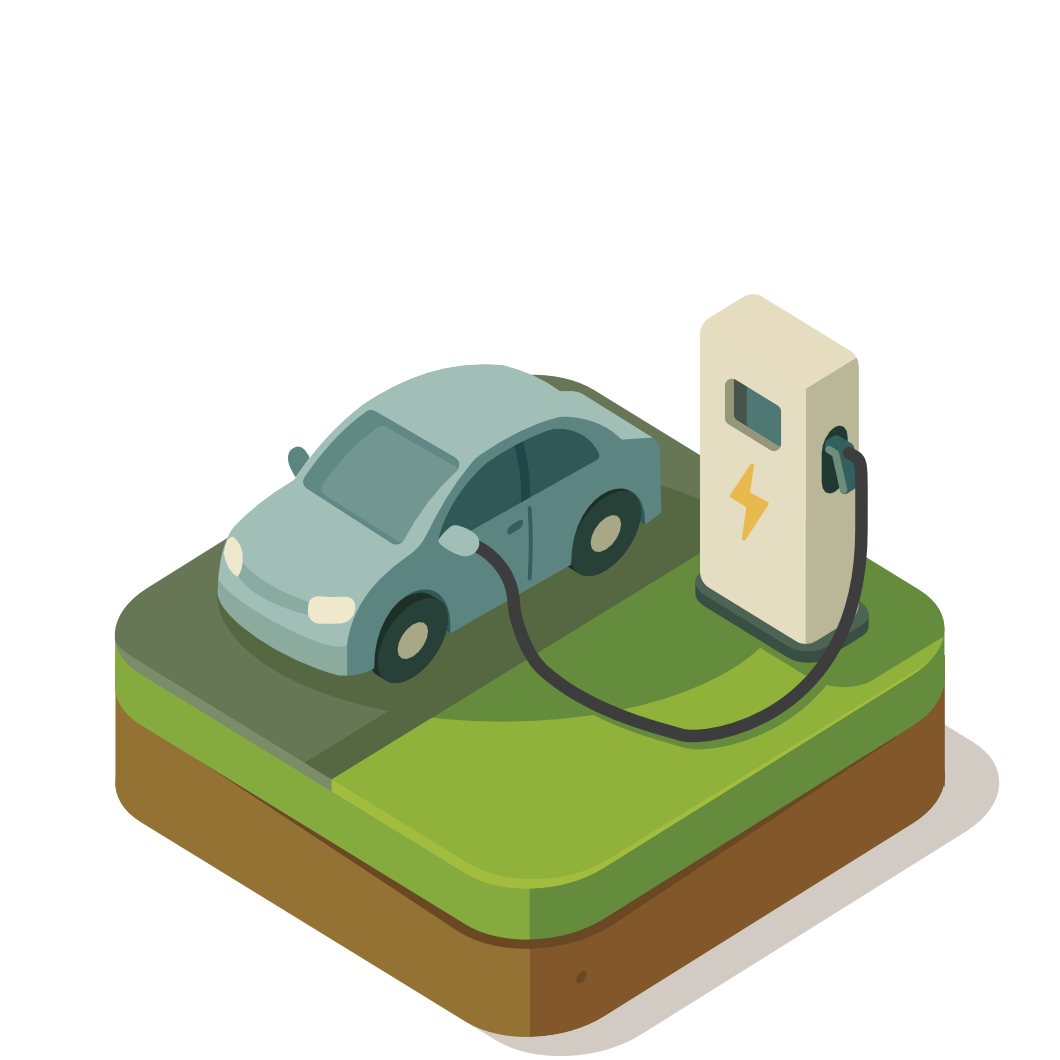
Use electric vehicles to cover 19.0 trillion passenger-km per year (17% of global passenger land transport)
Deploy more electric vehicles
Use electric vehicles to cover 19.0 trillion passenger-km per year (17% of global passenger land transport)
Electric vehicles (EVs) cut emissions by replacing gasoline and diesel cars with vehicles powered by electricity. Electric motors are much more efficient than combustion engines, so EVs use less energy per kilometre, and they have no exhaust-pipe CO₂. The remaining climate impact depends on how the electricity is generated: the cleaner the grid, the bigger the emissions saving.
Achieving one wedge requires the global stock of electric vehicles to increase 17-fold from 2024 levels to around 1 billion in 2050. This compares to a six-fold increase from 2020 to 2024 (1). A wedge also requires major growth in clean power to meet the extra charging demand (1). The additional clean electricity required is comparable to India’s entire electricity generation in 2024 (2,000 TWh) (2) – equivalent to ~0.7 wedges of wind, solar or nuclear power.
Deploying electric vehicles can deliver up to four wedges in total.
 Deploy more biofuel vehicles
Use biofuel vehicles to cover 20.0 trillion passenger-km per year (18% of global passenger land transport in 2050)
Deploy more biofuel vehicles
Use biofuel vehicles to cover 20.0 trillion passenger-km per year (18% of global passenger land transport in 2050)
Biofuels replace gasoline and diesel with liquid fuels made from plants (such as sugar, corn, or oils) or from wastes and residues. When grown sustainably, the carbon released when biofuels are burned can be partly balanced by the CO₂ that the feedstock absorbed while growing. However, real world emissions depend on farming inputs, processing energy, and land-use changes caused by expanding biofuel crops, which can reduce or even completely offset climate benefits.
Achieving one wedge requires roughly a ten-fold increase in bioethanol use. For context, ethanol provided around 3% of transport demand in 2023, requiring about 116 billion litres (1). This requires around 22 million hectares of cropland (2), an area roughly the size of Belarus (0.2 million km²) (3). In the US, most motor gasoline sold is about 10% ethanol by volume, so a wedge requires roughly doubling the US blending rates and applying this across the entire global fleet of cars (4).
Deploying biofuel vehicles can deliver 1 wedge in total.
 Improve efficiency of cars
Improve the efficiency of cars, reducing fuel use to 3.72 litres per 100 km (50% less than current global average consumption)
Improve efficiency of cars
Improve the efficiency of cars, reducing fuel use to 3.72 litres per 100 km (50% less than current global average consumption)
Improving vehicle efficiency reduces emissions by using less gasoline or diesel to travel the same distance. This can come from better engines and gearboxes, hybrid systems, lighter materials, improved aerodynamics, and low-rolling-resistance tyres. Because burning fuel creates CO₂ directly, every litre saved avoids emissions at the tailpipe.
Achieving one wedge requires doubling the fuel economy of current vehicles, getting the average car on the roads up to current “best-in-class” hybrid performance, similar to that of a Toyota Prius (1). Light-duty vehicles average about 7.5 litres per 100 km (31 mpg) globally today, so halving fuel use to 3.72 litres per 100 km (63 mpg) requires fuel economy to consistently increase by over 2% per year until 2050 (2).
Improving vehicle efficiency can deliver 1 wedge in total.
 Fly less often
Reduce global aviation by 10.5 trillion passenger-km per year (70% of global passenger air travel in 2050)
Fly less often
Reduce global aviation by 10.5 trillion passenger-km per year (70% of global passenger air travel in 2050)
Aeroplanes contribute to global warming through both burning jet fuel (which has greater impacts at higher altitudes) and other effects such as persistent contrails and changes in atmospheric chemistry from nitrogen oxide emissions (1). Reducing the number of flights reduces these emissions, for example by avoiding the need to travel (e.g. with online meetings), or shifting to lower-carbon modes (e.g. high-speed rail).
Achieving one wedge requires a reduction similar in scale to the drop seen during the COVID-19 pandemic, when global airline traffic fell 66% in 2020 (2). Air travel is growing rapidly and so the absolute reduction is about 30% greater than all passenger air travel in 2023 (8.17 trillion passenger-kilometres) (3).
Reducing air travel can deliver 1 wedge in total.
 Use more public transport
Use public transport to cover 21.3 trillion passenger-km per year (19% of global passenger land transport in 2050)
Use more public transport
Use public transport to cover 21.3 trillion passenger-km per year (19% of global passenger land transport in 2050)
Using more public transport cuts emissions by shifting trips from private vehicles to buses, trams, metros and trains that carry many people at once. That means less fuel burned per passenger-kilometre, especially where services are electrified and the electricity supply is low-carbon.
Achieving one wedge requires increasing global public transport usage by around 80%, from around 7.9 km/capita/day in 2020 to 13.9 km/capita/day in 2050. This is roughly twice the rates seen in London (7.2 km/capita/day) (1).
Using more public transport can deliver 1 wedge in total.
 Avoid car travel, walk or cycle
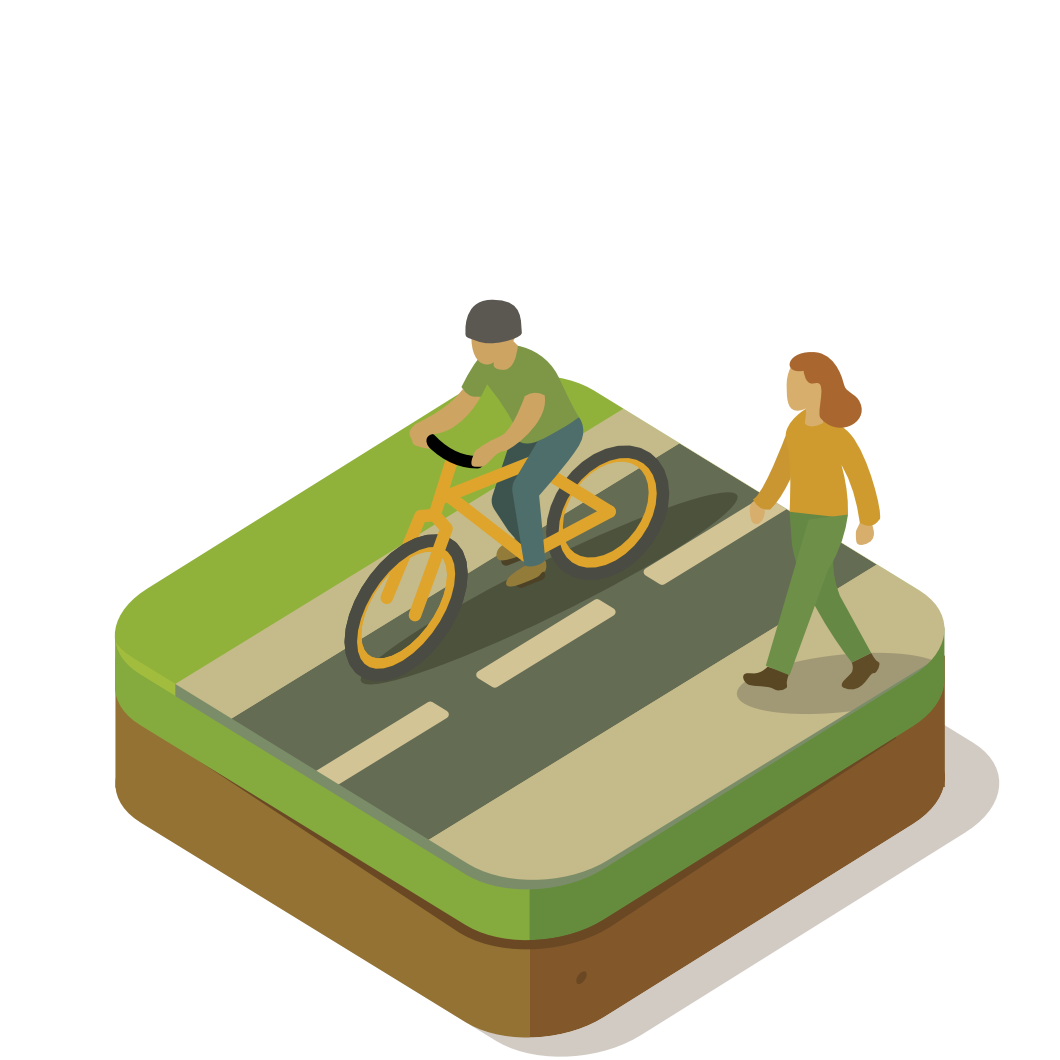
Use active travel modes for an extra 18.7 trillion passenger-km per year (17% of global passenger land transport in 2050)
Avoid car travel, walk or cycle
Use active travel modes for an extra 18.7 trillion passenger-km per year (17% of global passenger land transport in 2050)
Using active travel cuts emissions by shifting trips from private vehicles to walking and cycling. That means less fuel burned per kilometre travelled, and can also reduce congestion and local air pollution. Active travel works best when towns and cities are designed so everyday destinations are close and safe to reach without a car (for example protected cycle lanes, low-traffic neighbourhoods, and good public transport connections).
Achieving one wedge requires that active travel rises from about 3 km per person per day today to 6.6 km per person per day by 2050. If this distance were walked, it would be roughly 9,000 steps per day – a level that sits in the range linked to meaningful health benefits and is often more achievable for many people than a 10,000-step target (1).
Active travel can deliver 1 wedge in total.